

The death toll from Indonesia's commuter train crash has risen to 15 after rescuers finished removing victims from the wreckage at Bekasi Timur Station in West Java, east of Jakarta. The collision happened on a busy rail line, which is why the story has drawn national attention and sharp concern about passenger safety.
Dozens of people were also hurt, and the scene stayed active through the night as emergency teams searched the damaged cars. What follows is the clearest picture so far: how the crash happened, what rescuers found, and what authorities are likely to examine next.
How the crash unfolded and what rescuers found at the scene
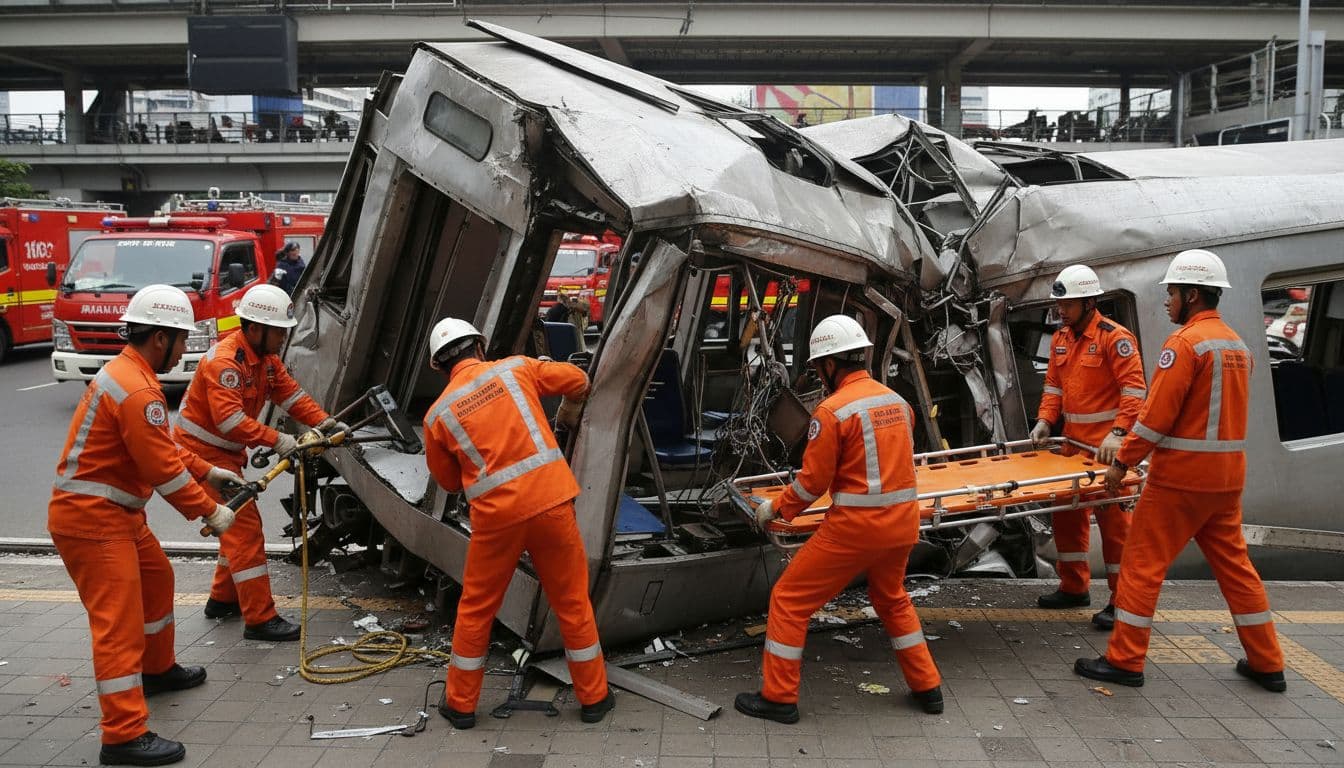
The crash took place Monday night at Bekasi Timur Station, outside Indonesia's capital. Early reports said a long-distance train struck the rear car of a stopped commuter train. That impact left one carriage badly crushed and forced rescuers to work in tight, twisted spaces.
Local rescue crews, police, medical workers, and railway staff reached the scene and began pulling out survivors. As the hours passed, the operation shifted from emergency treatment to a careful search inside the most damaged section. By Tuesday morning, crews had cleared the wreckage and moved victims to hospitals for care or identification.
The final evacuation and the rising death toll
The toll increased after rescuers recovered the last victims from the damaged commuter car. According to AP's report from Bekasi, authorities said 15 people died and 88 injured people were taken to hospitals. AP also reported that all of the dead were women, and the hardest-hit coach was one reserved for female passengers.
Death tolls often change after a rail crash because some victims remain trapped for hours, while others die after reaching a hospital. In the first phase, officials are focused on rescue and transport, not final counts. Numbers usually settle only after hospitals, police, and search teams compare records.
"There are no further casualties," search and rescue chief Mohammad Syafii said after crews finished the evacuation.
What witnesses and officials reported from the crash site
Early accounts from the station pointed to panic in the first minutes after impact. Passengers got out where they could, while rescuers moved toward the crushed rear section. The most severe damage appears to have been concentrated in one coach, which made access slower and more dangerous for crews.
Officials also described a scene that changed hour by hour. At first, the priority was getting injured passengers out fast. Later, teams had to cut through bent metal, stabilize parts of the train, and clear the area without causing more harm. That shift is common in serious rail accidents, because rescue work and recovery work are not the same task.
What may have caused the commuter train crash
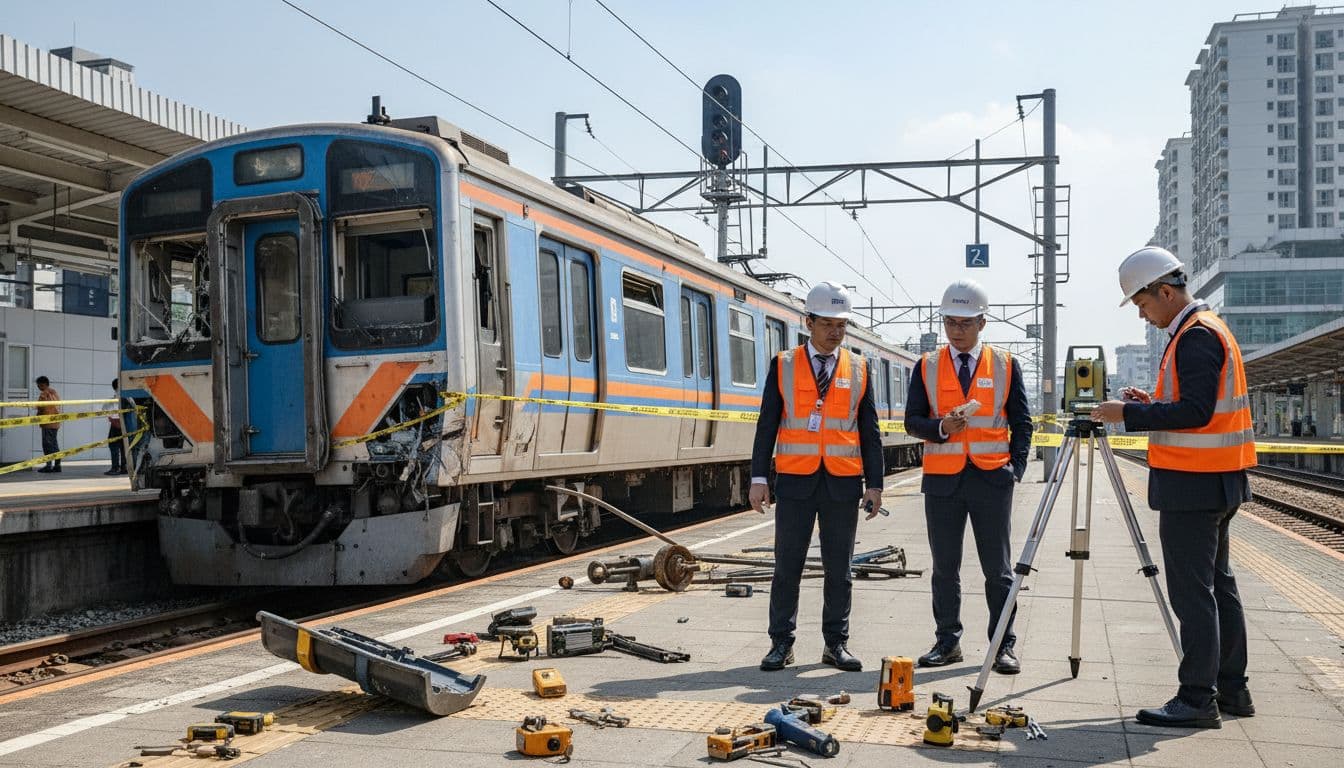
Authorities have not confirmed a final cause. Police began looking into the collision soon after it happened, and Indonesia's National Transportation Safety Committee, KNKT, opened its own probe. In cases like this, investigators try to rebuild the event minute by minute, because a crash can come from one failure or from several smaller mistakes at once.
That process is slow by design. A damaged signal, an error in train handling, a track problem, or a breakdown in communication can all matter. Still, investigators need evidence before naming any one factor.
The questions investigators will try to answer first
The first round of questions is usually practical and direct. Investigators will want to know:
- how fast each train was moving
- What the signals showed before impact
- whether the track and switching equipment worked properly
- What the drivers and control staff saw and did
- What maintenance and inspection records show
Those details help build a timeline. They also show whether this was a single failure or a chain of errors.
Why rail accidents can take time to explain
Early reports often change because the first hours are chaotic. Witnesses may remember events differently, and some evidence can be hidden under wreckage until cranes and cutting tools open the scene. Data from the trains and track systems also needs careful review.
That is why official findings rarely come right away. Tempo's report on the Bekasi investigation said KNKT investigators moved in quickly to gather facts, while transport officials left the deeper cause analysis to that team. A solid answer depends on records, site checks, and interviews lining up.
What this tragedy means for passengers and Indonesia's rail safety
For many people in Greater Jakarta, commuter rail is not optional. It's how they get to work, school, hospitals, and home again. A crash like this shakes trust because it hits a system that riders depend on every day.
The damage also reaches beyond the station. Families wait outside hospitals, workers lose a familiar route, and nearby communities see their transport link turn into a disaster site. In the short term, emergency care and service recovery matter most. After that, the public will want plain answers.
How the crash affects commuters and nearby communities
The human cost is larger than the casualty figure. Survivors now face treatment, shock, and long recovery periods. Families of the dead face grief while also waiting for formal identification and official updates.
Meanwhile, commuters deal with delays and changed routes. Even people who were nowhere near Bekasi can feel the effect, because trust in a rail network drops fast after a deadly collision. When everyday travel suddenly feels unsafe, the damage spreads through work schedules, family routines, and public confidence.
What readers should watch for next
The next updates will matter. Watch for confirmed hospital figures, changes in the condition of survivors, and any revisions to the official casualty count. Readers should also look for interim findings on signal systems, crew actions, and track conditions.
Government response will be another key point. Tempo's latest update on the toll and safety review said officials plan to review railway safety, with extra focus on risky crossings. The rail operator's response, and KNKT's final report, will show whether this was a rare failure or a warning sign of wider problems.
Conclusion
Rescuers have finished clearing the wreckage at Bekasi Timur Station, and the death toll now stands at 15. That update closes the rescue phase, but it does not close the story.
Families still need support, survivors still need care, and passengers still need answers they can trust. The next step is a full investigation that identifies what went wrong and what must change before people board those trains again.